
COPE Workbook
filter by category
filter by languages
Literatur zum Umgang mit traumatisierten Menschen für nicht-professionelle Fachkräfte
Word document with specialist literature on the topic
Anbieter von Fortbildungen zum Thema Traumapädagogik
CSV file with a list of approx. 10 providers of continuing education in the field of trauma pedagogy, with short descriptions
Fachbuch über traumatisierte Kinder in Schule und Unterricht
Hehmsoth, Carl (2020): Traumatized Children in School and Teaching: When Children Cannot Will. Stuttgart: Utb.
Report of the National Working Group of Psychosocial Centers for Refugees and Torture Victims
written by Doris Assinger and Heike Krennmair, available on the server of the Directorate of Education Upper Austria
Short description on the topic of trauma pedagogy
Defnition of Complex PTSD according to ICD-11
The official ICD-11 definition of Complex PTSD
Polski Instytut Traumy
Quarterly dedicated to trauma and its psychological consequences. The idea of creating the quarterly arose at the Polish Institute of Trauma as an element of our mission related to spreading knowledge about the impact of trauma on our functioning. We hope that the quarterly will help gather knowledge about the impact of trauma on human functioning in one place and allow us to spread knowledge about help.
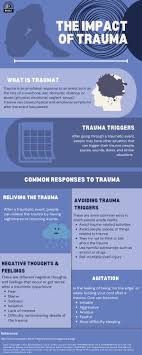
Trauma-Informed Care in Behavioral Health Services (SAHMSA)
Providing a comprehensive literature review on trauma, traumatic stress, trauma-informed care (TIC), and trauma-related interventions is a daunting task when considering the quantity and prolific production of research in this area in the past 20 years. To manage the volume of information, this literature review mainly focuses on reviews and meta-analyses rather than seminal work to address many of the most relevant topics.
Dobre praktyki edukacji dorosłych w obszarze włączania społecznego
“WYJŚCIE Z CIENIA dobre praktyki edukacji dorosłych w obszarze włączania społecznego” jest rezultatem projektu “Edukacja dorosłych jako narzędzie do włączenia społecznego”, zrealizowanego w ramach programu Erasmus+ Edukacja dorosłych. W ciągu 3 lat w ramach międzynarodowego partnerstwa EDU4ADU wspólnie poszukiwaliśmy rozwiązań, metod i narzędzi, które pozwoliłyby na zwiększenie jakości oferty uczenia się i wsparcia w procesach włączania społecznego osób zagrożonych marginalizacją. Na co dzień współpracujemy z osobami, które często borykają się z szeregiem problemów, żyjąc na obrzeżach życia społecznego i zawodowego.
Heart without boarders
An organ that beats without our command, guided by an invisible electric field. Some things within us work perfectly without our control. This is an invitation to trust life. Let energy flow, embrace the perfection of nature.
Every heartbeat is an act of deep trust, a movement that arises without asking for permission. The heart works for you in silence, even when you do not listen to it, even when you forget it. It is proof that within us there is a natural wisdom, independent of control and rationality. The most authentic wonders happen when we stop trying to manage everything. Welcome the flow, embrace the mystery, and let energy take its course.
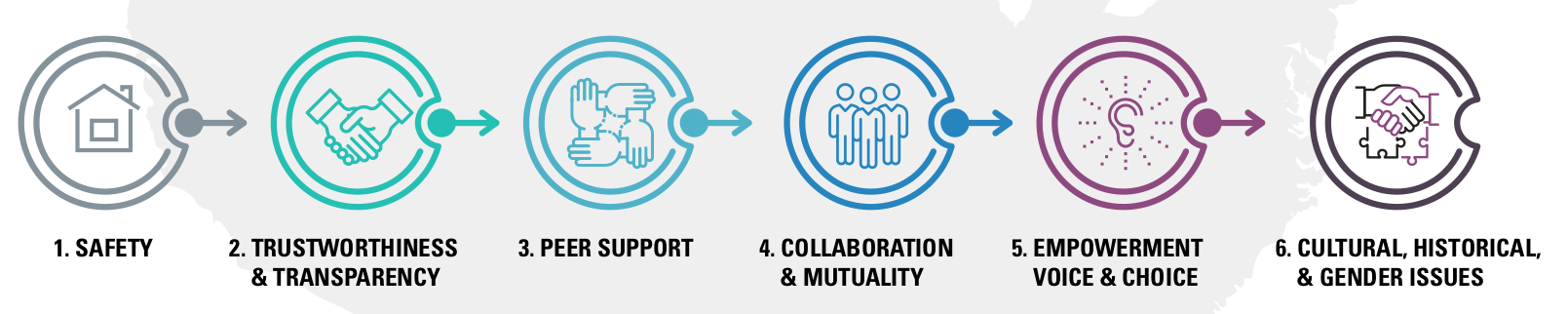
6 GUIDING PRINCIPLES TO A TRAUMA-INFORMED APPROACH (CDC)
Infographic about the 6 TIC principles
Centrum Samopomocy w Gdyni
We help you find the strength within yourself to take on new challenges and work on yourself. We teach how to cope with mental crises independently. We deal with self-help.
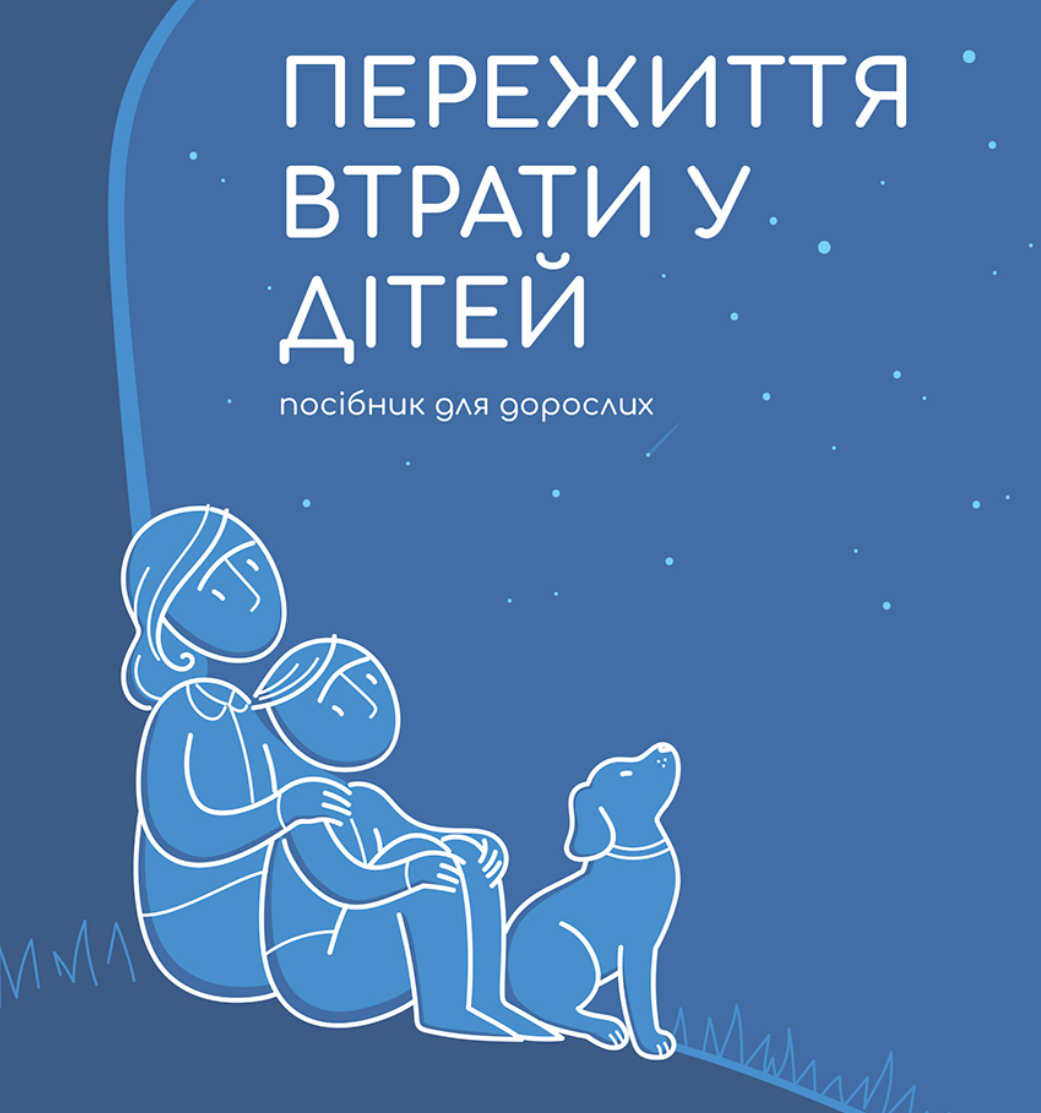
Пережиття втрати у дітей
The authors delve into various aspects of children's reactions and processes of experiencing loss, offering an understanding of how children grieve in different settings, including at home and at school.
Psihologija u zaštiti mentalnog zdravlja – priručnik na hrvatskom jeziku
The manual is intended for psychologists as a guide in direct practice and as such is the first professional book which, in full accordance with the most important state strategic document in the field of mental health protection, affirms the capacities of the psychological profession.

Istituto dell’Approccio Centrato sulla Persona
L’Istituto dell’Approccio Centrato sulla Persona (IACP) è un’organizzazione non-profit di formazione, consulenza e ricerca.
Жіночі міграційні потоки та їх наслідки
- Socio-economic factors – causes of migration: wars, economic instability, search for work, education or security.
- Gender specificities – women more often work in care, domestic work, education sectors, which forms "feminized" segments of the labor market.
- Vulnerability and risks – a greater risk of exploitation, violence, trafficking, discrimination and double burden (work + family).
- Integration – challenges in adaptation, language barriers, access to social services and healthcare.
- Impact on families – transformation of family roles, new dynamics between generations, the phenomenon of "children left behind".
- Psychological consequences – stress, feelings of isolation, but also the development of resilience, a new identity and self-confidence.
- Positive impact – sending remittances, acquiring new skills, cultural exchange, strengthening the role of women in host societies.
- Policy and rights – importance of access to legal support, protection of migrant women's rights and social integration programs.
Онлайн-скринінг психологічної травми
Ділимося з вами анкетою самоскринінгу психологічної травми, яка допоможе вам виявити свою реакцію на стрес чи потенційно травматичну подію.
Якщо ви пережили психотравмуючу подію
Ця книжечка має дві частини. Перша ознайомлює з посттравматичним стресовим розладом (ПТСР): що це таке, як він впливає на людей і що його підтримує. Друга пояснює, як можна розпочати процес одужання від ПТСР.
Посібник самодопомоги
Цей посібник — є практичним довідником з самодопомоги для людей, які пережили травму. Він розроблений на основі підходу Інституту Бодинаміки (Bodynamic International Aps) і фокусується на розумінні та керуванні емоціями, самосприйняттям та зв’язком між тілом і розумом.
Stowarzyszenie Na Drodze Ekspresji
Zmieniamy świadomość i rzeczywistość społeczną. Wspieramy osoby doświadczające kryzysów psychicznych. Włączamy osoby z niepełnosprawnościami w życie społeczności lokalnych. Cenimy sobie kreatywność i nie boimy się próbować nowych rzeczy. Animujemy aktywność obywatelską i rozwój lokalny. Od 2004 roku udaje nam się pobudzać ducha społecznych inicjatyw.
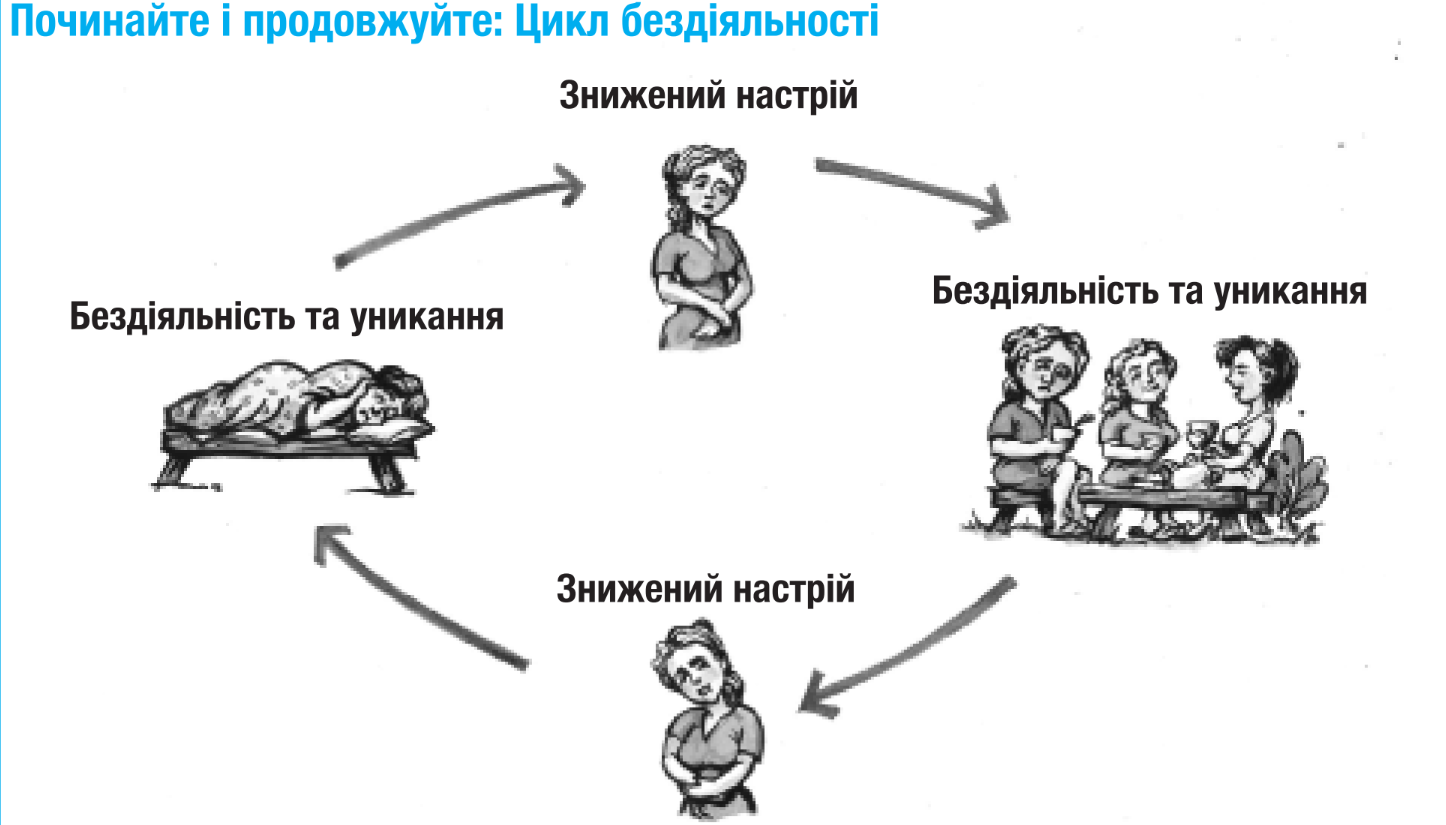
УПРАВЛІННЯ ПРОБЛЕМАМИ ПЛЮС (УП+)
Individual psychological support for adults experiencing distress in communities affected by adverse circumstances
ПЕРША ПСИХОЛОГІЧНА ДОПОМОГА
An educational and methodological guide is intended for use in the field of mental health protection and psychosocial support for people who have been affected by emergency situations or crisis events, with the aim of training trainer-facilitators to conduct training sessions on providing first psychological aid.
наҐАЙДайки
Це – GUIDE for media. The purpose of the GUIDE — to challenge the stigma. To infuse the topic of mental health with healthier meanings. To help media build in society an understanding of how to live in a state of well-being, realize one's potential, overcome daily stresses, work effectively and productively, and contribute to community life
Trauma and trauma care in Europe
The European countries have a long history of exposure to large-scale trauma. In the early 1990s the increasing awareness of the consequences of trauma within the mental health community led to the foundation of local societies for psychotraumatology across Europe and the European Society of Traumatic Stress Studies (ESTSS), which celebrated its 25th anniversary in 2018. The focus of this article is to describe the current state of care for survivors of trauma in the 15 European countries where ESTSS member societies have been established.
Brief descriptions on the historical burden of trauma in each country are followed by an overview of the care system for trauma survivors in the countries, the stateof-the-art of interventions, current challenges in caring for survivors and the topics that need to be most urgently addressed in the future. The reports from the different countries
demonstrate how important steps towards a better provision of care for survivors of trauma have been made in Europe.
Given the cultural and economic diversity of the continent, there are also differences between the European countries, for instance with regard to the
use of evidence-based treatments. Strategies to overcome these differences, like the new ESTSS training curricula for care-providers across Europe, are briefly discussed.
Nessuno deve improvvisarsi psicoterapeuta
Il professionista saggio rispetta i suoi limiti che delineano lo spazio in cui può operare efficacemente in scienza e coscienza. Chiarificazioni sulla differenza di essere psicoterapeuta e non esserlo, tra essere trauma informato e essere uno psicoterapeuta trauma informato.
Strumenti di autovalutazione ACEs (Esperienze Infantili Avverse)e PTSD (Disturbo post traumatico da stress) In italiano
Questi strumenti sono utili per una prima autovalutazione, ma non sostituiscono una diagnosi professionale. Se i risultati indicano la possibilità di un disturbo, è consigliabile consultare uno specialista della salute mentale competente sul trauma emozionale.
WHO ADDRESSING ADVERSE CHILDHOOD EXPERIENCES TO IMPROVE PUBLIC HEALTH
In the decade since the first Adverse Childhood Experiences (ACE) Study results were published, a number of other initiatives in developed and developing countries, have
begun examining the consequences of child maltreatment and other traumatic stressors for health risk behaviours and long-term chronic disease consequences.
These include a comparative risk assessment of child sexual abuse to inform the global burden of disease (GBD) estimates; the Global Schools-based Student Health Survey (GSHS), the International Society for Prevention of Child Abuse and Neglect (ISPCAN) International Child Abuse Screening Tool (ICAST), and country-specific projects (e.g. in Australia, China, Malaysia, Singapore, South Africa, Swaziland, Vietnam).
Trauma Informed Plymouth Network Code of Ethics
The Trauma Informed Plymouth Network (The Network) Code of Ethics is one of the ways we put our Network’s trauma informed values into practice. It recognises that
everything we do in connection to the Network will be, and should be, measured against the highest possible standards of ethical conduct and our own aspirations to
be a trauma informed and shame sensitive community.
Our commitment to the highest standards helps us to embody the values enshrined within our Plymouth Trauma Lens, be respectful and caring of those who have experienced trauma and adversity, provide a safe space for Network members to connect and learn together reflectively, and enable us to attract new members to the Network community. Enabling each other to feel safe, be safe and enjoy trusted and respectful relationships has been key to our success and something we need to always consider.
Le pesanti perdite a livello sanitario ed economico inflitte dalla distruzione della sicurezza umana
Finalmente, dopo molti anni di resistenza, oggi la maggioranza delle persone accetta l’evidenza scientifica del fatto che viviamo in quella che Paul Cruzen, membro dell’Accademia
Mondiale dell’Arte e della Scienza ha definito come l’Era dell’Antropocene dato che l’impatto principale sul pianeta e su tutte le sue forme di vita è costituito dal comportamento degli esseri umani (Crutzen and Stoermer, 2000).
L’istruzione non-formale come strumento per l’inclusione di tutti
Gli esseri umani non smettono mai di imparare e maturare. Tutti impariamo cose diverse, in momenti diversi e in diversi ambiti della nostra vita. Molto impariamo dalla scuola, ma non dobbiamo trascurare le numerose opportunità che ci vengono offerte al di fuori del contesto di apprendimento accademico. Tutte le esperienze di apprendimento nella vita contribuiscono alla crescita personale e portano ad una migliore comprensione dell’ambiente in cui si vive, portando anche ad una maggiore partecipazione nella società. Il sistema di istruzione formale (scuola, università, formazione professionale) mira a fornire ai giovani una conoscenza di base da utilizzare per la loro integrazione nella società. Sfortunatamente, in molti casi il sistema di istruzione formale non offre ai giovani, per diverse ragioni, un bagaglio di conoscenze sufficiente per le loro esigenze. Per questo motivo, per il proprio sviluppo personale è necessario disporre di altre fonti. L’istruzione non-formale rappresenta una di queste, in particolare – ma non solo- per giovani con minori opportunità. Questo capitolo approfondirà i diversi metodi di apprendimento, mettendoli a confronto e considerando perché e come l’istruzione non-formale può rappresentare una “seconda chance”per il nostro gruppo di destinatari.
Memoria, ricordo e trauma
La conoscenza dei diversi sistemi di memoria sta avendo importanti implicazioni nel lavoro clinico: in particolare, la memoria implicita ha stimolato molte riflessioni sulle
nuove dimensioni inconsce (Mancia, 2007), i cui contenuti sono riferibili a protorappresentazioni percettivo-motorie avvenute precocemente, prima dello sviluppo delle
competenze linguistiche. Il neonato possiede già alla nascita un alto livello di organizzazione delle esperienze emotive e percettivo-sensoriali: è in grado di organizzare rappresentazioni presimboliche dei modelli di interazione.
Disregolazione affettiva, trauma e dissociazione in un gruppo non clinico di adolescenti. Una prospettiva evolutiva
RIASSUNTO: Obiettivo: Questo studio si è proposto di indagare gli effetti della disregolazione affettiva e dei processi dissociativi sulle esperienze traumatiche al fine di verificare un modello psicopatologico a matrice relazionale centrato sulla teoria dell’attaccamento. Metodo: Ad un gruppo di 96 studenti che frequentano l’ultimo anno della scuola superiore sono stati somministrati i test A-DES, TAS 20 e TSI-A. I dati ottenuti sono stati elaborati attraverso procedure di analisi statistica. Risultati I punteggi ottenuti dai soggetti
non presentano differenze significative in relazione alla variabile sesso. L’analisi delle correlazioni sembra avvalorare l’ipotesi dell’esistenza di un nesso fra alessitimia, dissociazione e trauma. Gli studi di regressione lineare multipla sembrano indicare che le esperienze dissociative possano in certa misura predire i sintomi traumatici. Conclusioni: Prendendo le distanze dai modelli classici di lettura del trauma, viene proposta una riformulazione del concetto in termini evolutivi e relazionali.
Il Progetto COPE dell’Unione Europea Fornire strumenti agli educatori informali per riconoscere ed evitare di ritraumatizzare i sopravvissuti ai traumi
Il Progetto COPE – Preparing Non-formal Education in Europe for Traumatized Learners, ERASMUS+ 2023-1-DE02-KA220-ADU-000155022, è una Cooperazione Partenariato
nell’Educazione degli Adulti. Lo scopo del Progetto COPE è creare e fornire strumenti efficaci di “Trauma Informed Best Practices” agli educatori informali, permettendo loro di riconoscere i segnali dei traumi emozionali nei loro utenti, evitando così di ritraumatizzare i sopravvissuti ai traumi e indirizzandoli verso un aiuto professionale qualificato.
Studio nazionale “Tagliare sui Bambini è davvero un risparmio?”
lo studio che presentiamo costituisce la prima ricerca sistematica sui costi della violenza sull’infanzia e l’adolescenza in Italia.
Già a livello internazionale sono numerosi gli studi e le stime sull’impatto economico della violenza sui bambini (USA, Canada, Australia, Regno Unito, etc.). L’Organizzazione Mondiale della Sanità ha da tempo inserito questo filone di ricerca fra gli strumenti fondamentali per le decisioni connesse alle politiche nazionali in favore dell’infanzia e dell’adolescenza..
Guérir par l’art
Ce texte explore comment la thérapie par l’art offre des solutions innovantes pour aider les individus à surmonter les traumatismes vécus durant l’enfance. En s’appuyant sur des bases scientifiques, l’auteur démontre que les approches créatives, telles que la peinture, la musique ou la danse, permettent d’exprimer des émotions souvent impossibles à verbaliser. Ces pratiques sollicitent différentes zones du cerveau pour favoriser la résilience émotionnelle et réduire les symptômes du stress post-traumatique. L’article souligne également l’émergence des technologies numériques, comme la réalité virtuelle, qui enrichissent les méthodes de soin traditionnelles. En conclusion, cette ressource présente l’art comme un vecteur essentiel de guérison holistique capable de transformer durablement la santé mentale des survivants.
L’art comme outil de distanciation
L’article explicite le mécanisme du traumatisme et le rôle de l’art. Il explique que produire une œuvre permet d’extérioriser le vécu et d’adopter un nouveau point de vue sur l’événement, et que l’art aide à réparer les liens communautaires et à stopper la transmission du traumatisme aux générations futures.
Kreativität als Weg zur Traumaintegration
er Artikel von Karl Hosang untersucht den Zusammenhang zwischen Kreativität und Trauma aus neurobiologischer und psychologischer Sicht. Trauma wird als seelische Verletzung verstanden, die innere Spannungen und Konflikte erzeugt. Kreativität kann helfen, diese Spannungen zu verarbeiten, indem neue Verbindungen zwischen Gedanken, Gefühlen und Erfahrungen geschaffen werden.
Aus neurobiologischer Perspektive kann ein Trauma das Nervensystem überfordern und die emotionale Verarbeitung erschweren. Der kreative Prozess unterstützt hingegen die Integration traumatischer Erfahrungen, reduziert innere Unordnung und fördert die Selbstregulation. Körperliche Ausdrucksformen wie Tanz oder Bewegung können diesen Prozess zusätzlich unterstützen.
Zusammenfassend beschreibt Hosang Kreativität als einen wichtigen Mechanismus, der Menschen dabei helfen kann, traumatische Erfahrungen zu integrieren, innere Konflikte zu lösen und die persönliche Entwicklung zu fördern.
Künstlerische Übungen zur Traumabewältigung
Der Artikel stellt verschiedene kunsttherapeutische Übungen vor, die den Heilungsprozess nach traumatischen Erfahrungen unterstützen können. Dazu gehören das Zeichnen eines „sicheren Ortes“, Gefühls-Collagen, Körperumrisse zur Darstellung körperlicher Empfindungen sowie Mandalas zur Förderung von Entspannung und Achtsamkeit. Weitere Aktivitäten wie Trauma-Zeitleisten, Selbstporträts, Dankbarkeitsbilder oder Tonskulpturen helfen dabei, Erlebnisse zu verarbeiten, die eigene Identität zu stärken und persönliche Ressourcen sichtbar zu machen. Auch Gruppenprojekte wie gemeinsame Wandbilder fördern den Austausch, das Zugehörigkeitsgefühl und die gegenseitige Unterstützung.
The Four Functions of Expressive Arts Therapy in Trauma Recovery
The youtube video presents four key functions of expressive arts therapy in trauma recovery: self-regulation, co-regulation, exploration, and restoration. Self-regulation helps individuals reduce stress and anxiety through sensory-based creative activities that promote physical and emotional calming. Co-regulation focuses on the therapeutic relationship, using shared experiences such as rhythm, movement, and sound to build trust, connection, and emotional attunement.
The exploration phase encourages individuals to express thoughts and emotions through non-verbal forms such as art, movement, or imagery, allowing traumatic experiences to be processed without relying solely on words. Finally, restoration aims to rebuild a sense of wholeness, resilience, and well-being by fostering imagination, playfulness, and personal growth. Together, these functions support healing and help individuals reconnect with themselves and others.
Art Therapy Activities for Self-Regulation and Grounding
The video presents two art therapy exercises aimed at promoting self-regulation and grounding through a sensory, “bottom-up” approach. The first, bilateral drawing, involves drawing simultaneously with both hands while focusing on breathing. This activity supports brain integration, encourages emotional expression, and concludes with giving the artwork a title to help connect sensory experiences with conscious reflection.
The second exercise, mandala drawing, uses a circle and a central point to create a sense of focus, safety, and containment. By engaging with colors, textures, sounds, and intuitive movements, participants remain present in the moment while allowing unconscious emotions to emerge and be expressed. Together, these activities help calm the nervous system, enhance self-awareness, and support emotional regulation.

Eugene T Gendlin “Focusing”
The book presents the ‘focusing’ method — a way of tapping into bodily-felt knowledge of a problem or experience that has not yet been put into words (‘felt sense’). Gendlin describes six steps for working with this vague bodily sensation, which enable one to gain a new understanding of a situation and relieve emotional tension, including that associated with trauma.
Art Therapy, Trauma, and Neuroscience, Theoretical and Practical Perspectives
A collection that brings together neuroscientific research on trauma with the practice of art therapy, demonstrating how creative, sensory interventions can provide access to traumatic memories that are difficult to address through verbal therapy alone. It combines theoretical chapters with practical techniques based on the latest understanding of how the brain functions in the context of trauma.
Cultural Humility in Art Therapy
The book explores how art therapists can practise ‘cultural humility’—a constant critical reflection on power, privilege and their own blind spots within the therapeutic relationship—rather than claiming ‘cultural competence’ as a finished state. It addresses issues of identity, diversity and systemic factors in trauma-informed art therapy practice.
Essential Art Therapy Exercises_ Effective Techniques to Manage Anxiety, Depression, and PTSD
A practical guide/workbook containing specific art therapy exercises for addressing anxiety, depression and PTSD. Designed for both therapists and the general public, it combines structured creative tasks with brief explanations of their psychological significance.
Johanne Hamel – Somatic Art Therapy_ Alleviating Pain and Trauma through Art
This book presents an integrative model developed by Amel, which combines art therapy with body-oriented approaches to address physical pain and trauma. The main focus is on how creative expression, combined with body awareness, helps to process trauma ‘trapped’ in the body; the book draws on clinical case studies and specific techniques.
Peter A. Levine – Waking the Tiger – Healing Trauma – The Innate Capacity to Transform Overwhelming Experiences
Levin argues that trauma becomes embedded in the body as unresolved survival energy, rather than merely as a psychological memory, drawing a parallel with the way wild animals naturally ‘release’ fight-or-flight-or-freeze responses. The book introduces the method of ‘Somatic Experiencing’ — a body-oriented approach to the gradual and safe release of this blocked energy.
Psychological first aid kit for migrants
For tens of thousands of people, moving away became a chance to save themselves. ‘They’ve betrayed us, they’ve given up, they’re running away’ – such comments could be heard even from those closest to them. What lies behind these words? Resentment, anger, disappointment? Did the person have a choice? What inner turmoil accompanied this decision? How should we respond to people who were forced to leave their country? People who were literally fleeing the fighting? Through the answers to these questions, we want to create a space of support and acceptance for any choice – whether it be emigration or the desire to stay, the decision to settle in a new place or to return, to continue participating in and taking an interest in life back home, or to avoid the news for the time being – in any case, we have far more reasons to help one another, to be considerate of each other and to come together than to defend ourselves and isolate ourselves.

The European participatory community for students, teachers and education stakeholders to act collectively on innovative

Arteterapia ekspresyjna w terapii traumy – Iryna Serhiienko
Artykuł naukowy Iryny Serhiienko „Arteterapia ekspresyjna w terapii traumy”, opublikowany w czasopiśmie „Warstwy” Uniwersytetu Rzeszowskiego. Autorka przedstawia wykorzystanie arteterapii ekspresyjnej w pracy z doświadczeniem traumy oraz pokazuje, w jaki sposób proces twórczy i różne formy ekspresji artystycznej mogą wspierać wyrażanie trudnych doświadczeń i emocji. Artykuł omawia psychologiczne podstawy arteterapii, podejście ekspresyjne oraz znaczenie pracy grupowej i dialogu. Materiał szczególnie wartościowy dla terapeutów, artystów, edukatorów i osób pracujących z grupami oraz społecznościami dotkniętymi traumą.

Arteterapia ekspresyjna w terapii traumy – Iryna Serhiienko
Artykuł naukowy Iryny Serhiienko „Arteterapia ekspresyjna w terapii traumy”, opublikowany w czasopiśmie „Warstwy” Uniwersytetu Rzeszowskiego. Autorka przedstawia wykorzystanie arteterapii ekspresyjnej w pracy z doświadczeniem traumy oraz pokazuje, w jaki sposób proces twórczy i różne formy ekspresji artystycznej mogą wspierać wyrażanie trudnych doświadczeń i emocji. Artykuł omawia psychologiczne podstawy arteterapii, podejście ekspresyjne oraz znaczenie pracy grupowej i dialogu. Materiał szczególnie wartościowy dla terapeutów, artystów, edukatorów i osób pracujących z grupami oraz społecznościami dotkniętymi traumą.

Arteterapia ekspresyjna w terapii traumy – Iryna Serhiienko
Artykuł Iryny Serhiienko „Arteterapia ekspresyjna w terapii traumy” przedstawia możliwości wykorzystania sztuki i procesu twórczego w pracy z osobami, które doświadczyły traumy. Autorka omawia psychologiczne podstawy arteterapii ekspresyjnej oraz dwa podejścia – psychodynamiczne i expressive arts therapy – pokazując, w jaki sposób działania artystyczne mogą tworzyć przestrzeń do wyrażania trudnych emocji i doświadczeń, które nie zawsze można łatwo opisać słowami. Ważną częścią przedstawionego podejścia jest również dialog oraz praca w grupie, w której twórczość staje się punktem wyjścia do komunikacji i dzielenia się doświadczeniem. Artykuł pokazuje sztukę nie tylko jako formę ekspresji, lecz także jako narzędzie wspierające proces pracy z traumą. Jest szczególnie wartościowy dla terapeutów, artystów, edukatorów i osób prowadzących działania twórcze oraz psychospołeczne z grupami doświadczającymi kryzysu lub traumy.
Arteterapia ekspresyjna w terapii traumy – Iryna Serhiienko
Artykuł Iryny Serhiienko „Arteterapia ekspresyjna w terapii traumy” przedstawia możliwości wykorzystania sztuki i procesu twórczego w pracy z osobami, które doświadczyły traumy. Autorka omawia psychologiczne podstawy arteterapii ekspresyjnej oraz dwa podejścia – psychodynamiczne i expressive arts therapy – pokazując, w jaki sposób działania artystyczne mogą tworzyć przestrzeń do wyrażania trudnych emocji i doświadczeń, które nie zawsze można łatwo opisać słowami. Ważną częścią przedstawionego podejścia jest również dialog oraz praca w grupie, w której twórczość staje się punktem wyjścia do komunikacji i dzielenia się doświadczeniem. Artykuł pokazuje sztukę nie tylko jako formę ekspresji, lecz także jako narzędzie wspierające proces pracy z traumą. Jest szczególnie wartościowy dla terapeutów, artystów, edukatorów i osób prowadzących działania twórcze oraz psychospołeczne z grupami doświadczającymi kryzysu lub traumy.
Dance/Movement Therapy: A Whole Person Approach to Working with Trauma and Building Resilience – Ilene A. Serlin
Artykuł Ilene A. Serlin przedstawia terapię tańcem i ruchem jako holistyczne podejście do pracy z traumą i budowania odporności psychicznej. Autorka pokazuje, jak ruch, ciało i twórcza ekspresja mogą pomóc wyrazić doświadczenia i emocje, które trudno przekazać słowami, oraz wspierać proces odbudowy po traumie. Szczególną uwagę poświęca połączeniu ciała, emocji, relacji społecznych, kreatywności oraz poczucia sensu. Artykuł pokazuje również zastosowanie tych metod w różnych kontekstach kulturowych i społecznych oraz ich znaczenie nie tylko dla jednostek, ale także dla wspólnot dotkniętych traumą i kryzysem. To wartościowy materiał dla terapeutów, artystów, edukatorów i osób wykorzystujących ruch oraz sztukę w działaniach wspierających dobrostan i resilience.

Agata Goździewicz-Rostankowska – „Przegląd wybranych badań nad zastosowaniem arteterapii w pracy z dziećmi uchodźców i imigrantów”
Artykuł Agaty Goździewicz-Rostankowskiej przedstawia przegląd badań dotyczących wykorzystania arteterapii w pracy z dziećmi uchodźców i imigrantów. Autorka pokazuje, w jaki sposób różne formy sztuki – m.in. rysunek, malarstwo, muzyka, taniec i drama – mogą wspierać dzieci w wyrażaniu emocji, radzeniu sobie z trudnymi i traumatycznymi doświadczeniami oraz adaptacji w nowym środowisku. Tekst zwraca uwagę na potencjał działań artystycznych jako narzędzia wspierającego dobrostan i funkcjonowanie psychologiczne dzieci z doświadczeniem migracji.
Artykuł ukazał się w 2023 roku w czasopiśmie naukowym „Annales Universitatis Mariae Curie-Skłodowska, sectio J – Paedagogia-Psychologia”, wydawanym przez Uniwersytet Marii Curie-Skłodowskiej w Lublinie.

„Model PERMA” – Sławomir Postek
Polska publikacja Ośrodka Rozwoju Edukacji z 2026 r. dotycząca dobrostanu i psychologii pozytywnej. Autor przedstawia pięć elementów modelu PERMA: pozytywne emocje, zaangażowanie, relacje, poczucie sensu i osiągnięcia. Co ważne, materiał nie pozostaje tylko przy teorii — zawiera również ćwiczenia, które można wykorzystywać w codziennym życiu i pracy edukacyjnej.

Czy teraz mnie słyszysz? Muzykoterapia zorientowana na traumę i odporność psychiczną w kontekście opieki zastępczej
Artykuł Ludwiki Koniecznej-Nowak z Akademii Muzycznej im. Karola Szymanowskiego w Katowicach pokazuje możliwości wykorzystania muzykoterapii w pracy z młodymi osobami, które doświadczyły zaniedbania, przemocy i traumy. Autorka łączy podejście trauma-informed z koncepcją odporności psychicznej, pokazując muzykę jako przestrzeń ekspresji, komunikacji, budowania relacji i wzmacniania własnych zasobów. Omawia również konkretne metody pracy muzykoterapeutycznej, m.in. improwizację, komponowanie i pisanie piosenek, wykonywanie muzyki oraz słuchanie. Rozważania teoretyczne uzupełniają przykłady z praktyki.

Dźwięki nadziei. Jak muzyka wspiera zdrowie psychiczne uchodźców
Artykuł Krzysztofa Stachyry z Uniwersytetu Marii Curie-Skłodowskiej w Lublinie pokazuje, w jaki sposób muzyka i muzykoterapia mogą wspierać zdrowie psychiczne osób z doświadczeniem uchodźstwa. Autor zwraca uwagę na rolę muzyki w regulacji emocji, redukowaniu napięcia, budowaniu poczucia bezpieczeństwa oraz wzmacnianiu relacji i więzi społecznych. Szczególne miejsce zajmuje podejście społecznościowe, w którym wspólne muzykowanie staje się przestrzenią ekspresji, kontaktu i odbudowywania zasobów po trudnych doświadczeniach. Tekst łączy perspektywę muzykoterapeutyczną z zagadnieniami traumy, odporności psychicznej i integracji społecznej.