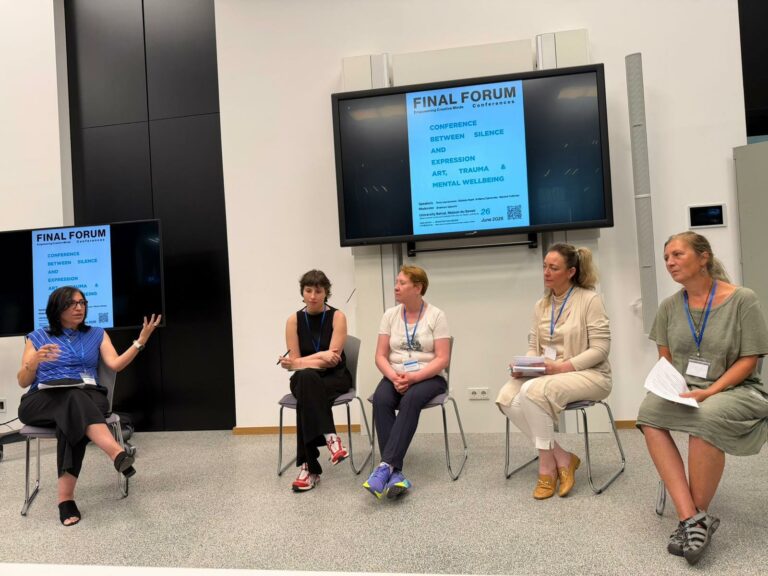
Elle a appelé à la création d’un point d’information unique et accessible où les artistes pourraient recevoir des conseils pratiques au lieu de devoir naviguer entre plusieurs institutions. Plus largement, elle a plaidé pour une reconnaissance juridique plus forte des artistes en tant que professionnels, avec des protections sociales qui reflètent les réalités des carrières artistiques plutôt que de forcer les artistes à s’inscrire dans des systèmes conçus pour d’autres professions.
Bien que le Luxembourg offre déjà des ressources précieuses, elle a noté que de nombreux artistes — en particulier les nouveaux venus — ne savent tout simplement pas où les trouver.
L’importance de la communauté
Bien que la réforme administrative soit restée un sujet important, la discussion est revenue à plusieurs reprises à une autre idée : la communauté compte tout autant que les politiques.
Pour Uyi Nosa Oduwa (LAPS Art), les opportunités émergent souvent à travers des relations personnelles plutôt que par le biais de procédures formelles. Les expositions dans des espaces non conventionnels, les collaborations avec d’autres artistes et les initiatives locales ont tous joué un rôle crucial pour l’aider à s’établir. Dans un pays aussi petit que le Luxembourg, a-t-il fait valoir, le fait de se montrer compte. Assister à des événements, prendre contact avec les institutions et faire partie de la communauté artistique locale ouvre souvent plus de portes que d’attendre que les systèmes répondent. Le soutien public reste essentiel, mais de solides réseaux artistiques sont tout aussi indispensables.
Le coût invisible de la création artistique
Pour Julie Wagener (Association des artistes visuels du Luxembourg – AAPL), les conversations sur la santé mentale des artistes ne peuvent être dissociées de leurs conditions de travail. L’épuisement professionnel, a-t-elle soutenu, n’est pas simplement un problème individuel mais la conséquence d’un système qui attend des artistes qu’ils restent constamment productifs tout en offrant peu de sécurité financière ou sociale. Le temps de préparation est souvent non rémunéré, les opportunités restent incertaines, et de nombreux artistes hésitent à interrompre leur travail de peur de perdre de futures commandes ou de la visibilité. Au-delà de la précarité financière se cache un autre fardeau, moins visible : le travail créatif est profondément personnel. Chaque exposition, illustration ou performance expose une partie de l’artiste au jugement public, rendant le travail artistique émotionnellement exigeant de manières rarement reconnues. Plutôt que de se concentrer uniquement sur le soutien en matière de santé mentale, Julie Wagener a plaidé pour un changement structurel : une rémunération équitable, une protection sociale renforcée, la reconnaissance du temps de préparation comme travail, et des conditions qui permettent aux artistes non seulement de survivre, mais de construire des carrières durables. Un point intéressant souligné par les différents intervenants est que le Luxembourg, en tant que petit pays, offre la possibilité d’appeler directement le ministère lorsque des questions se posent, afin d’être guidé. Cela donne un sentiment d’humanité dans ces processus et permet d’être aidé par des professionnels.
L’art comme bien public
Répondant depuis une perspective institutionnelle, Nadine Erpelding (Ministère de la Culture du Luxembourg) a souligné la reconnaissance croissante de la culture comme un bien public plutôt que comme un luxe. Elle a pointed to increasing international evidence showing that participation in the arts improves mental and physical health, reduces loneliness, strengthens communities, and can even contribute to lower healthcare costs. Le Luxembourg, a-t-elle expliqué, explore de plus en plus des collaborations entre les secteurs culturel et de la santé tout en continuant à améliorer les mécanismes de soutien aux artistes et aux organisations culturelles. La discussion a suggéré qu’investir dans la culture ne consiste pas simplement à soutenir les artistes — il s’agit aussi d’investir dans des sociétés plus saines et plus connectées.
Une responsabilité partagée
La conversation s’est conclue sur une note optimiste mais pragmatique. Les communes, les institutions nationales, les associations d’artistes et les artistes eux-mêmes ont tous un rôle à jouer dans la construction d’un écosystème culturel plus sain. Cliff Schmidt (Commune de Sanem) a souligné l’importance d’un engagement local continu pour créer des espaces où la culture peut s’épanouir. Julie Wagener (Association des artistes visuels du Luxembourg – AAPL) a insisté sur la nécessité d’une reconnaissance professionnelle plus forte et d’un plaidoyer collectif au sein du secteur artistique. Uyi Nosa Oduwa (LAPS Art)a mis en avant l’importance de l’ouverture, des réseaux et du soutien mutuel, tout en Nadine Erpelding (Ministère de la Culture du Luxembourg) a réaffirmé l’engagement du Ministère à renforcer les liens entre la culture, le bien-être et les politiques publiques. Pour clore la discussion, chaque intervenant a résumé ses espoirs pour l’avenir culturel du Luxembourg en un seul mot. Pour Julie Wagener (Association des artistes visuels du Luxembourg – AAPL), c’était professionnalisation : reconnaître le travail artistique comme une profession méritant des droits et des conditions adéquates. Pour Uyi Nosa Oduwa (LAPS Art), c’était « plus grand et meilleur »—une communauté artistique plus forte et plus connectée. Cliff Schmidt (Commune de Sanem) a choisi engagement, soulignant la nécessité d’un investissement public soutenu dans la culture. Enfin, Nadine Erpelding (Ministère de la Culture du Luxembourg) a terminé par résistance, soutenant que dans le monde d’aujourd’hui, l’art n’est pas seulement une forme de création, mais aussi un moyen de défendre l’ouverture, la démocratie et la cohésion sociale. Ensemble, ces quatre mots ont capturé l’esprit de la discussion : garantir que les artistes ne puissent pas seulement survivre au Luxembourg, mais qu’ils soient reconnus, soutenus et habilités à façonner la société à travers leur travail.